Passive House

Introduction

Where luxury is measured in comfort, performance, and precision.

A Passive House represents the pinnacle of intelligent design, where architecture, engineering, and sustainability work in harmony. It is carefully considered to deliver consistent indoor comfort, balanced
temperatures, and superior air quality. Every element is designed with precision to create a home that performs as beautifully as it looks.

The result is a refined living environment that operates effortlessly and efficiently throughout the year. Energy demand is significantly reduced without compromising on comfort or luxury. This approach not only enhances everyday wellbeing but also delivers long-term value, durability, and future-ready living.

PASSIVE HOUSE OVER NCC REQUIREMENTS

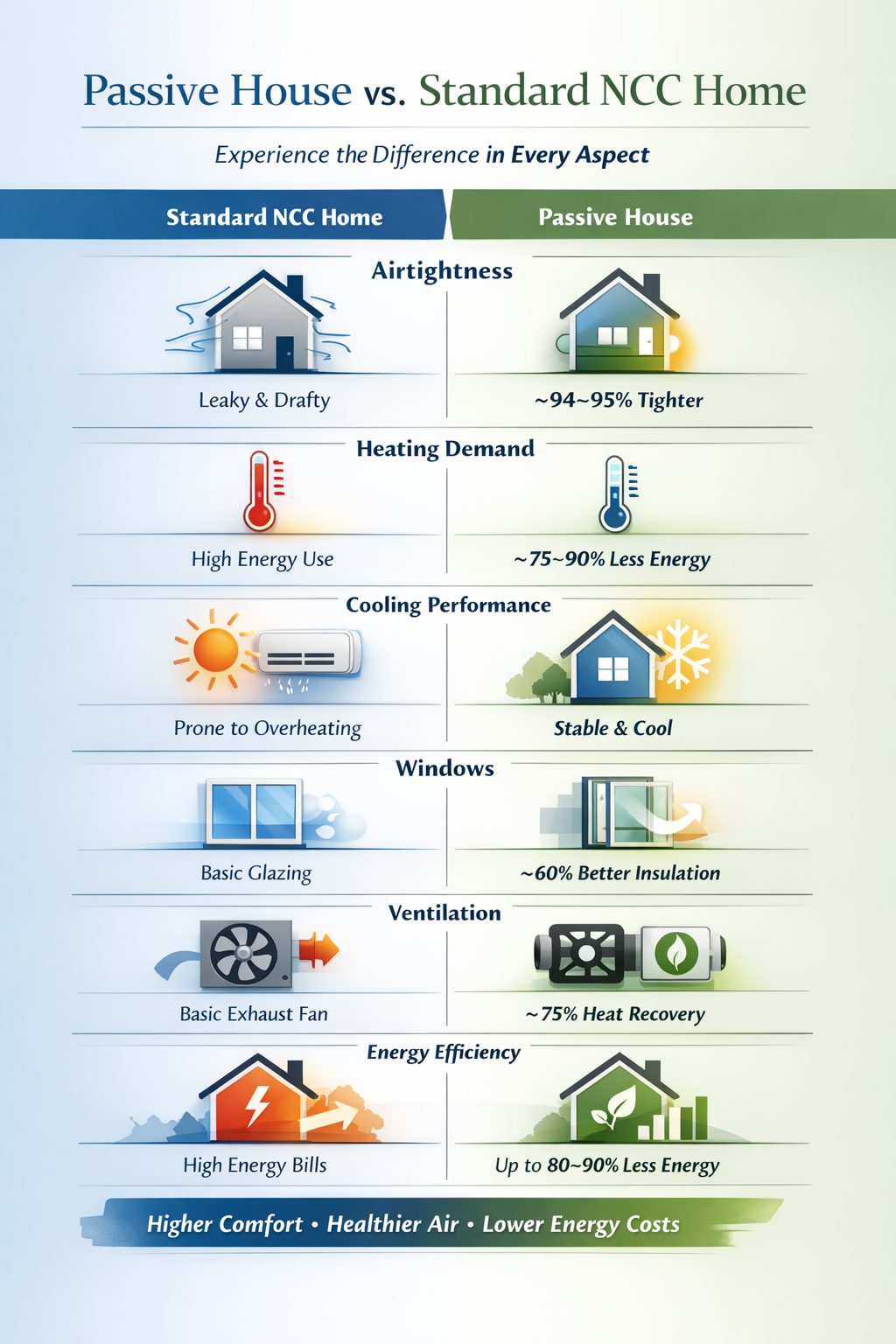
A Passive House is not just “a bit better” than an NCC- compliant house. Against Australia’s minimum NCC 2022 level —which is broadly a 7-star NatHERS-equivalent shell plus a Whole-of-Home budget—a Passive House is usually materially better, but the exact percentage varies by climate, design, orientation, glazing, and build quality.

AIR TIGHTNESS
ENERGY CONSUMPTION
WINDOWS AND GLAZING
VENTILATION HEAT RECOVERY
NOISE REDUCTION
LONG TERM RUNNING COST

The Science Behind Passive Living

Where building science transforms into everyday
comfort, efficiency, and enduring performance.

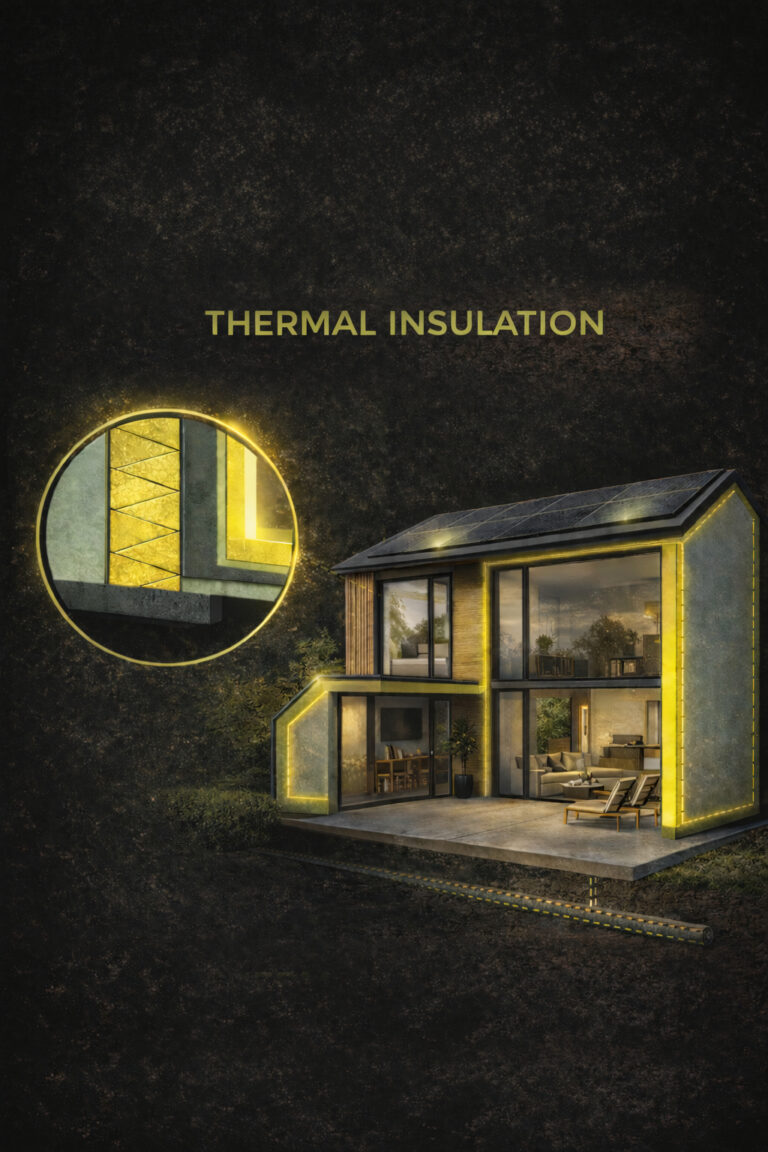
THERMAL INSULATION
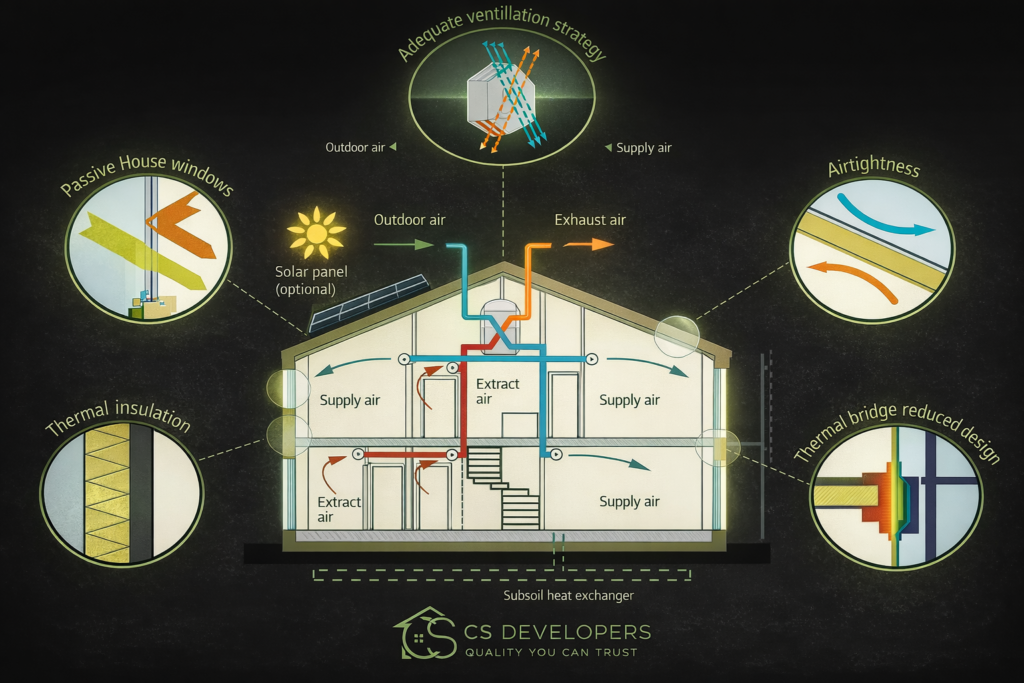
Thermal insulation in a Passive House is designed as a continuous, high-performance envelope that wraps the entire building. It significantly reduces heat transfer, keeping warmth inside during winter and outside during summer. This level of insulation stabilises internal temperatures, eliminating drafts and cold spots for consistent comfort. The result is a highly energy-efficient home that requires minimal heating and cooling while maintaining a superior living environment.
Image description
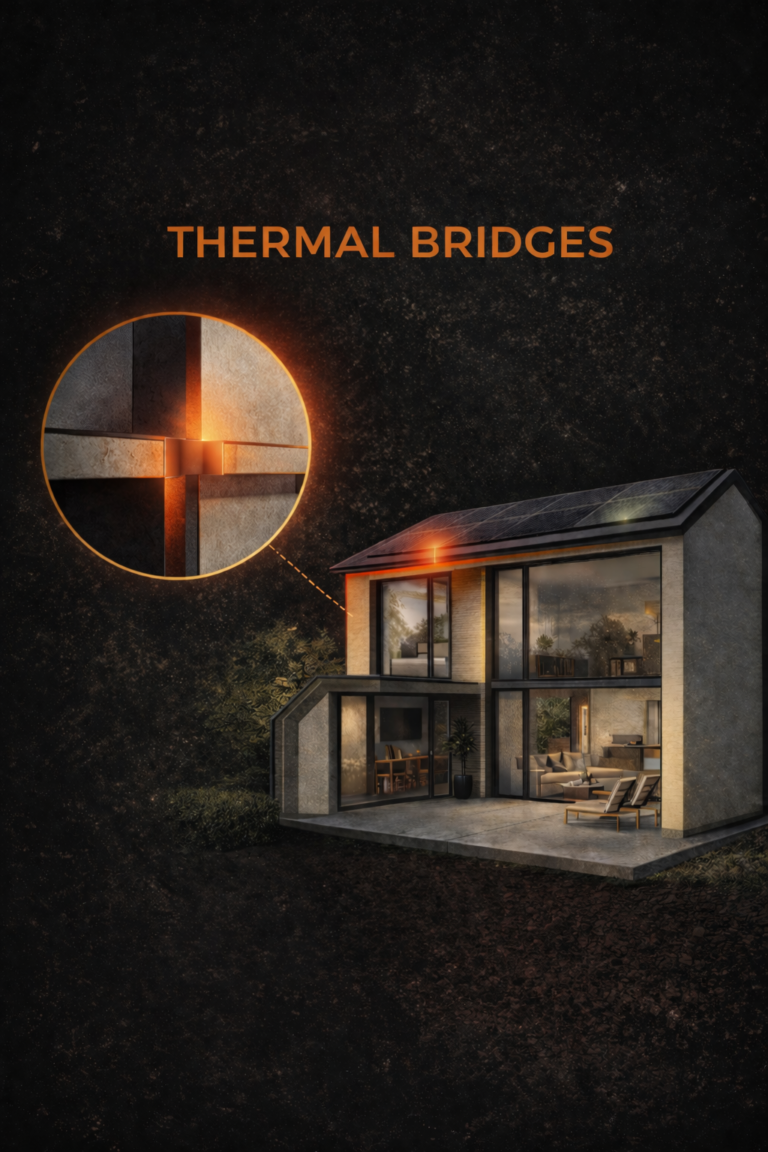
THERMAL BRIDGES
Thermal bridges are weak points in the building envelope where heat can easily escape or enter, reducing the overall efficiency of a home. In a Passive House, these are carefully eliminated through continuous insulation and precise detailing at all junctions and connections. By removing thermal bridges, the building achieves more consistent internal temperatures, enhanced comfort, and significantly lower energy loss.
Image description
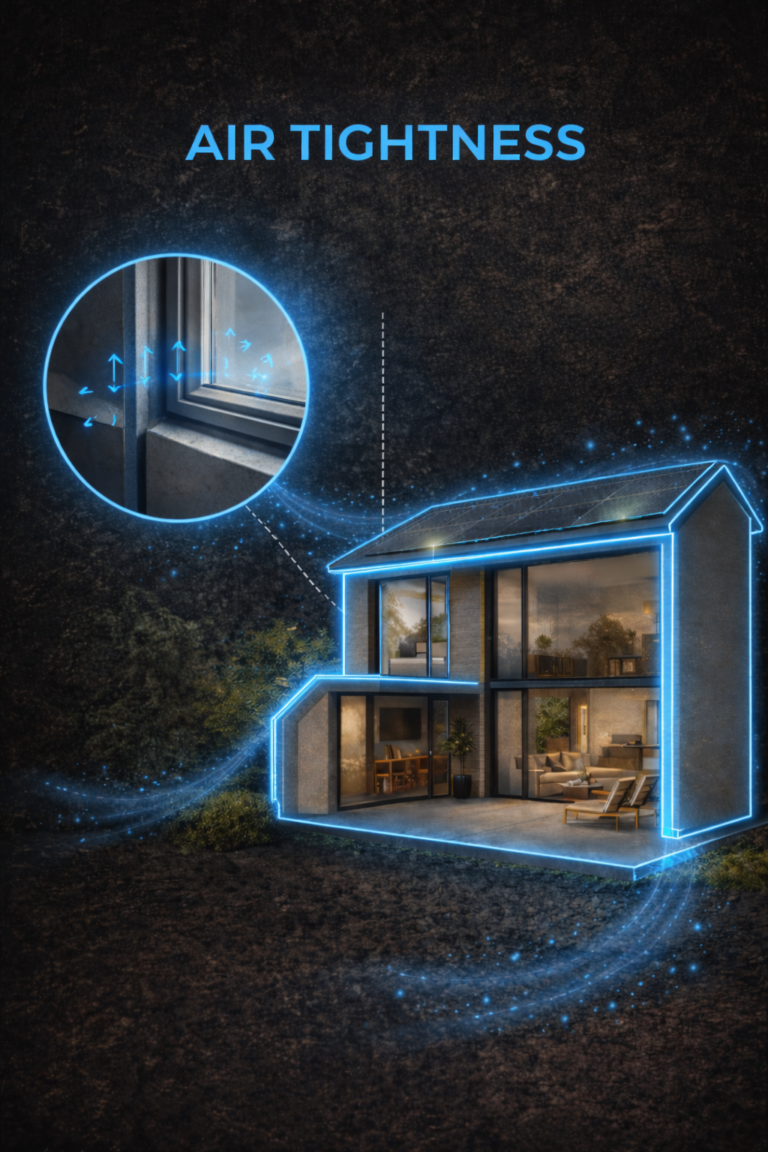
AIR TIGHTNESS
Airtightness refers to the control of unintended air leakage through the building envelope, which can significantly impact energy performance. In a Passive House, the structure is meticulously sealed using continuous air barriers and precise construction techniques to prevent drafts and heat loss. This level of airtightness ensures a stable indoor environment, improved comfort, and enhanced energy efficiency while maintaining fresh air through controlled ventilation systems.
Image description
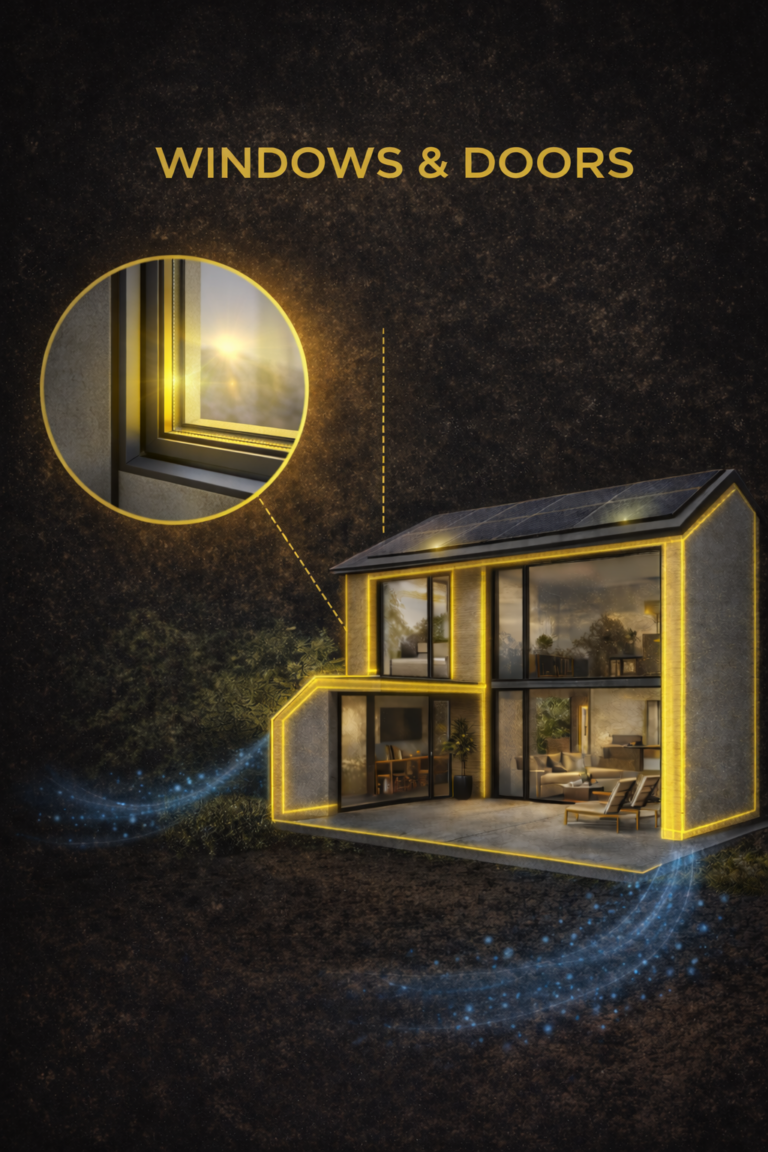
WINDOWS AND DOORS
Windows and doors play a critical role in the performance of a Passive House, acting as key points for both heat gain and loss. High- performance systems, typically triple-glazed and thermally broken, are carefully selected and positioned to optimise solar gain while minimising energy loss. When properly integrated into the building envelope, they enhance comfort, reduce heating and cooling demand, and contribute to a consistently efficient indoor environment.

Image description
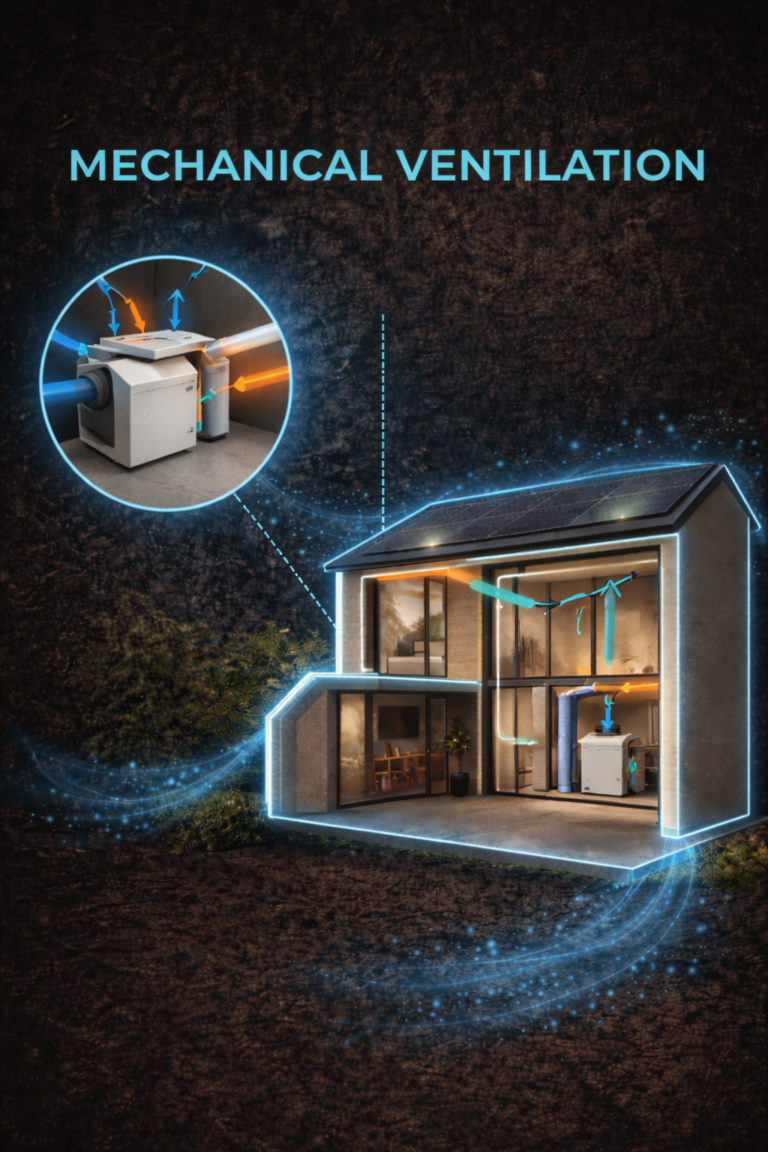
MECHANICAL VENTILATION
Mechanical ventilation is essential in a Passive House, ensuring a constant supply of fresh, filtered air while maintaining energy efficiency. Through a heat recovery ventilation system, stale indoor air is extracted and its heat is transferred to incoming fresh air, minimising heat loss. This controlled system provides superior indoor air quality, consistent comfort, and a healthy living environment year-round.
Image description

Transform Your Future with a PASSIVE HOUSE

Experience a home that is drastically more energy-efficient, stable in temperature, comfortable all year-round.